Latest Images
Town Walk 2026 - Part 21 - Bath Street
& Albion
w/e 28 June 2026
All of this week's pictures were
taken with a Nikon D3300 camera.
This part equates to part of 33 and all of 34
from the original Town Walk from 2005.
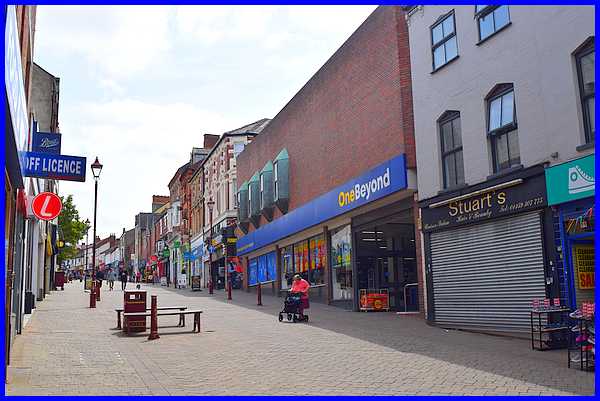
Continuing our walk up Bath Street "we can see the functional
rather than decorative appearance of the store now occupied by"
One Beyond which was formerly a Wilkinson store. In 2005
I highlighted the many changes occasioned by shops moving from
one location to another on Bath Street but also noted that this
particular building replaced "the impressive frontage
of the Central Methodist Church before its amalgamation with
the Bath Street Methodists further down the hill." What
I found most striking between this image and the similar from
2005, even though one was taken on a Saturday morning and the
other on a Monday afternoon, is the difference in the number
of people.
To record this photo as your favourite
from this week's selection vote for "One Beyond" below.
|
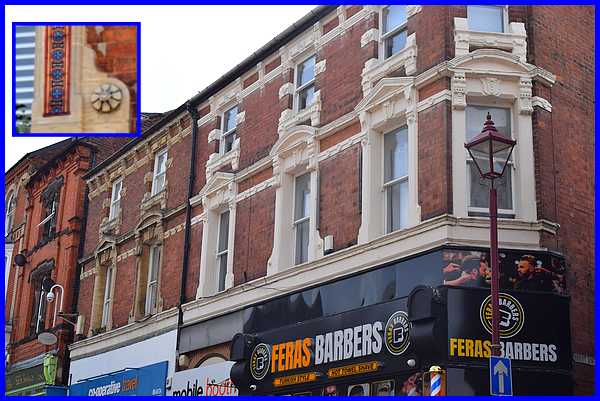
"But amid all the changes on Bath Street, some things
have stayed the same. As with buildings we have already seen
in the lower reaches of the street, some of the upper storeys
are very ornate and well worth a second look." For example
"there are still some gems of architectural decoration
to be seen just above the shop fronts" even if the signs
above the shop fronts, like Feras Barbers replacing Yeomans Outdoors
(the old Army Stores) are different.
To record this photo as your favourite
from this week's selection vote for "Ornate Upper Storey"
below.
|
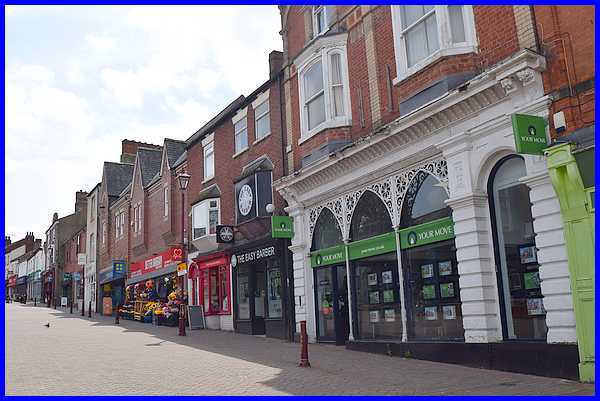
One shop that is worth a second look is the estate agent's at
no. 45 Bath Street which features a decorative cast iron front.
The gable end of the shop on the extreme left of the picture
had, in 2005, "the words 'Alan Wesson Shoe Repairs' painted
on" it but the shoe repairer has, like Elvis, left the
building. and the words have been painted over.
To record this photo as your favourite
from this week's selection vote for "Cast Iron Shop Front"
below.
|
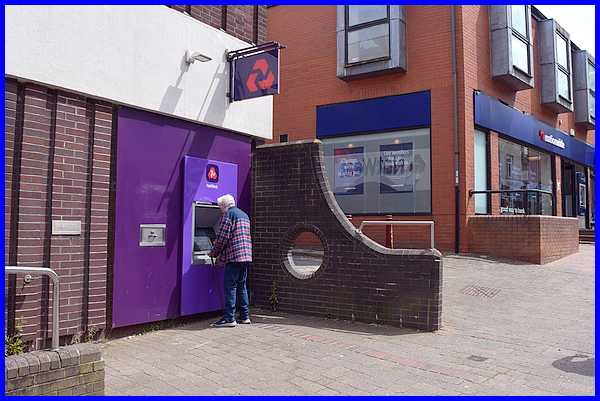
On the opposite side of the road is something that didn't get
a mention in the original Town Walk but as it is the top rated
"Place of Interest" on the Tripadvisor website, I thought
I had better include it now. Known as the NatWest hole in the
wall situated next to the ATM machine, another hole in the wall,
it's a favourite of children - and some adults too - who like
to climb through it. Metal bars were recently added to it to
prevent this but a public outcry resulted in them being removed
on the same day.
To record this photo as your favourite
from this week's selection vote for "Hole In The Wall"
below.
|
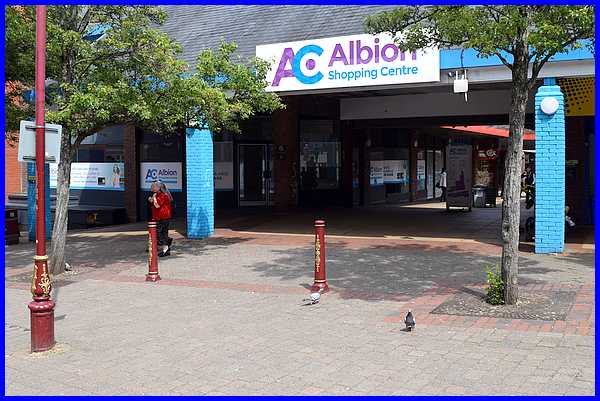
Our walk up Bath Street has now brought us to the Albion Centre.
Built on the site of the King's Cinema and Albion Place, an old
road linking Bath Street with Burr Lane, "the Albion
Centre was advertised at the town's Charter Centenary as a Borough
in 1987 as ''he New Face Of Shopping In Ilkeston'." In
2005 McDonald's occupied the corner unit and on Saturdays a market
trader sold flowers from buckets at the entrance to the precinct.
McDonald's closed and moved to new premises on the old Gas Works
site on Rutland Street and the unit has stood empty ever since.
To record this photo as your favourite
from this week's selection vote for "The Albion Centre"
below.
|
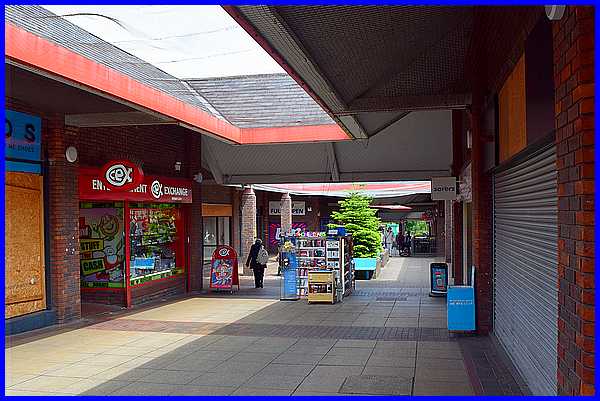
In the current challenging economic climate other traders have
vacated their units and approximately half now stand empty. "Free
parking for 250 cars" when the centre was first opened
was discontinued later and by 2005 charges had been introduced.
In an attempt to revitalise shopping areas in Erewash and help
shopkeepers, the council has revoked charges on Saturdays and
now car parking is once again free all weekend.. "We
can reach the car park by walking through the precinct."
To record this photo as your favourite
from this week's selection vote for "Shopping Precinct below.
|
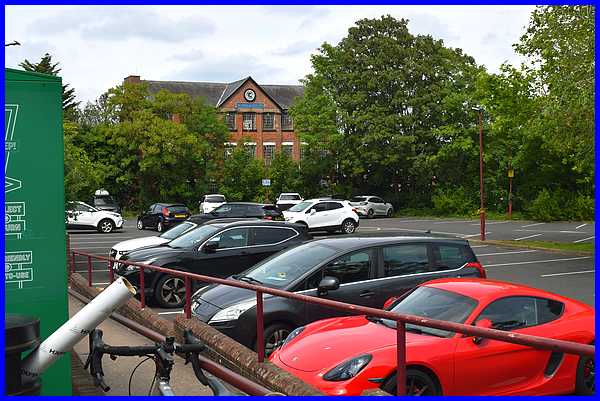
From the end of the precinct and overlooking the car park, what
is "believed to be Ilkeston's first large factory"
that now trades as Baltex
can be seen through the trees. The words of the company 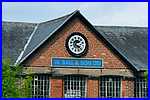 'W.
Ball and Son' are still proudly displayed in lettering beneath
the clock. It was founded in 1831 by the brothers William and
Francis Ball with their factory, The Albion Works, being built
in 1843. Built on the foundations of a small business by Francis
Ball to manufacture lace and hosiery. the company went on to
win a Gold award at the Great Exhibition of 1851. Since then
it has gone on to 'design, manufacture and supply high-specification
fabrics for world-leaders in markets including Medical, Defence
and Aerospace' winning several more awards on the way. In 2005
I wrote that Baltex "was awarded the Queen's Award For
Enterprise in 2003" to which can be added the Queens
Award for International Trade in 2009, an Innovation prize at
the World Conference of the Textile Institute in 2010 and the
Queens Award for International Trade again in 2020. 'W.
Ball and Son' are still proudly displayed in lettering beneath
the clock. It was founded in 1831 by the brothers William and
Francis Ball with their factory, The Albion Works, being built
in 1843. Built on the foundations of a small business by Francis
Ball to manufacture lace and hosiery. the company went on to
win a Gold award at the Great Exhibition of 1851. Since then
it has gone on to 'design, manufacture and supply high-specification
fabrics for world-leaders in markets including Medical, Defence
and Aerospace' winning several more awards on the way. In 2005
I wrote that Baltex "was awarded the Queen's Award For
Enterprise in 2003" to which can be added the Queens
Award for International Trade in 2009, an Innovation prize at
the World Conference of the Textile Institute in 2010 and the
Queens Award for International Trade again in 2020.
To record this photo as your favourite
from this week's selection vote for "Baltex" below.
|
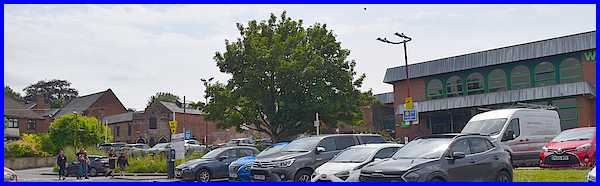
From the end of the precinct "we can now follow a footpath
towards East Street to gain access to another car park at the
rear of the shops in the shopping precinct and in front of the"
former Albion Leisure Centre. This view shows "the start
and finish point of our Town Walk, the Erewash Museum" on
the extreme left but we have a little further to go before reaching
it.
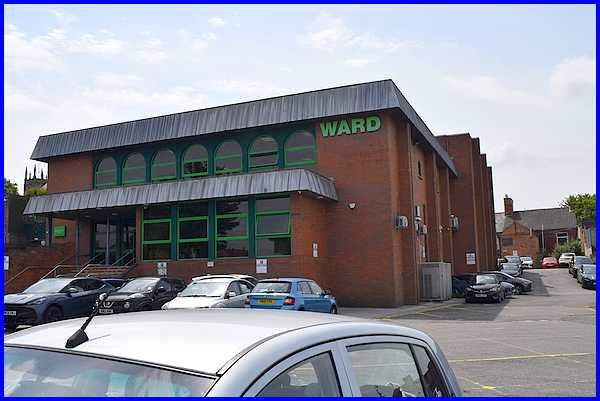
The Leisure Centre opened in 1986 and a news report in 2008 said
that it had been closed for a decade and was to be turned into
offices for the Ward recycling company. Now, in May this year,
it has been listed for sale with Wards expected to move out.
What I wrote in 2005 is still true today - "What will
become of the Albion Leisure Centre will no doubt be revealed
in the fullness of time." Our route continues up the
slope at the side of the building.
To record this photo as your favourite
from this week's selection vote for "Ward Recycling"
below.
|
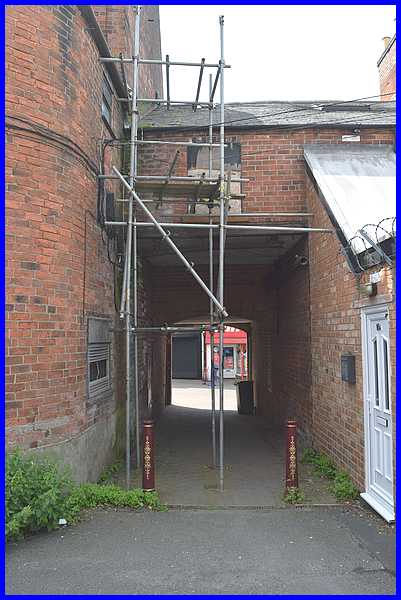
This returns us through the archway back to Bath Street "opposite
the shop mentioned earlier with the writing on the gable end."
To record this photo as your favourite
from this week's selection vote for "Archway" below.
|
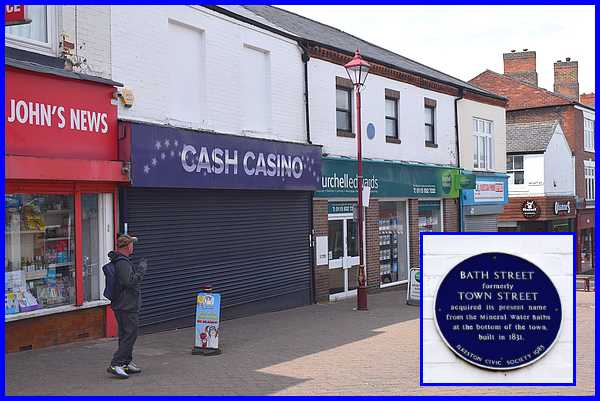
From the archway and looking to the right, the blue plaque that
reads "Bath Street formerly Town Street acquired its
present name from the Mineral Water Baths at the bottom of the
town built in 1831" can be seen between the upper windows
of the Burchell Edwards estate agent shop. I hadn't realised
before but some time in the last 21 years the plaque has been
moved from below the left hand window to its present position.
Of course like many other changes in Bath Street shop frontages
have changed and names altered but the newsagent's shop is still
called John's News even though John And Sue Ingall, whose names
were also displayed there in 2005 have long since retired. But
about turn and onwards up Bath Street as we head for our final
part of the walk back to the museum.
To record this photo as your favourite
from this week's selection vote for "Town Street Plaque"
below.
|